GBPUSD
GBPUSD Lot Size: How to Calculate Position Size on Cable, Step by Step
On GBPUSD, 1.0 lot is worth $10 per pip, 0.10 lot is worth $1 and 0.01 lot is worth 10 cents. In a US dollar account that never changes, whatever the price of the pound. What does change is how far the pair moves: GBPUSD travels further than EURUSD in a normal day, so the stop is usually wider and the lot a little smaller for the same risk.
This Education guide walks through the lot size formula step by step, with two worked examples, ready tables for $1,000 to $25,000 accounts, real daily move data from the last year, and what changes if your account is in pounds, euros or yen. Every number matches the free SIWAI GBPUSD lot size calculator, so you can rerun any row with your own stop.
Why one GBPUSD pip on 1.0 lot is always $10
GBPUSD, nicknamed cable, is quoted as pounds in dollars. A price of 1.3416 means one pound costs 1.3416 dollars. A pip is the fourth decimal, 0.0001, and the profit or loss on each pip is paid in the quote currency, which here is the US dollar.
A standard lot is 100,000 pounds, so on GBPUSD:
- 1.00 lot × 0.0001 = $10 per pip
- 0.10 lot × 0.0001 = $1 per pip
- 0.01 lot × 0.0001 = $0.10 per pip
Because the result is already in dollars, a US dollar account needs no conversion, exactly like EURUSD. Sterling is a big market to learn on: in the BIS 2025 Triennial Survey, sterling was on one side of 10.2% of all FX trades, and the United Kingdom was the largest FX trading center in the world with 38% of global turnover.
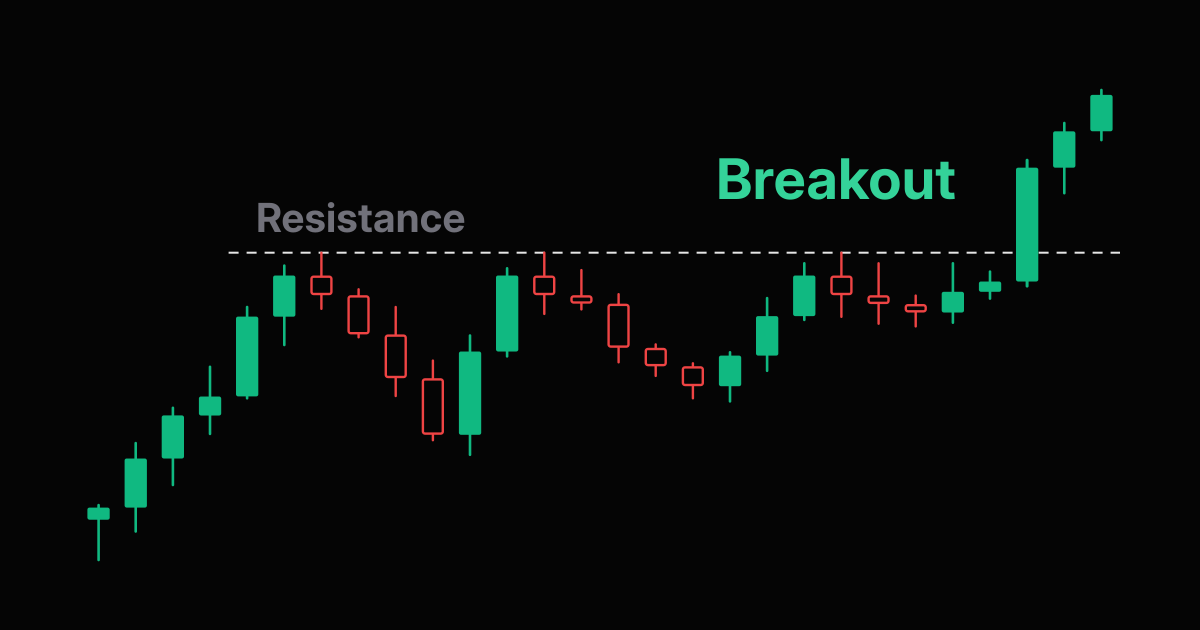
GBPUSD pip value for 0.01, 0.10, 0.50 and 1.0 lot
Read the table as "lots times $10 per pip." Nothing in it depends on the exchange rate, so it stays true whether the pound trades at 1.25 or 1.40.
| Lot size | Units | USD per pip | USD per 25 pips | USD per 100 pips |
|---|---|---|---|---|
| 0.01 (micro) | 1,000 | $0.10 | $2.50 | $10 |
| 0.10 (mini) | 10,000 | $1 | $25 | $100 |
| 0.50 | 50,000 | $5 | $125 | $500 |
| 1.00 (standard) | 100,000 | $10 | $250 | $1,000 |
Spread, commission and overnight swap come on top, so a real losing trade costs a little more than the table. Pairs where the dollar is the base work differently: on USDCHF a pip is worth more than $10, and on USDJPY and GBPJPY it is worth less.
How to calculate GBPUSD lot size in three steps
Position sizing starts from the money you accept to lose, not from the lot you would like to trade, as Investopedia's position sizing guide explains. For GBPUSD in a US dollar account:
- Pick the risk money. Account equity × risk percent, for example $5,000 × 1% = $50.
- Measure the stop from the chart. Put it where the idea is proven wrong, under the breakout candle or the last higher low, and count the pips. Then multiply by $10 to get the risk per 1.0 lot.
- Divide and round down. Lot size = risk money ÷ risk per 1.0 lot, rounded down to your broker's 0.01 step.
Risk money = account equity × risk percent
Risk per 1.0 lot = stop in pips × $10
Lot size = risk money ÷ risk per 1.0 lot
Example 1: $5,000 account, 1% risk, long GBPUSD with a 25 pip stop.
- Risk money: $5,000 × 1% = $50
- Risk per 1.0 lot: 25 × $10 = $250
- Lot size: $50 ÷ $250 = 0.20 lot
- Check: 0.20 lot is $2 per pip, so 25 pips cost exactly $50
Example 2: $10,000 account, 1% risk, a 35 pip stop under a breakout candle.
- Risk money: $10,000 × 1% = $100
- Risk per 1.0 lot: 35 × $10 = $350
- Lot size: $100 ÷ $350 = 0.2857, rounded down to 0.28 lot
- Check: 0.28 × $350 = $98 at risk (0.98% of the account)
Always round down. Rounding 0.2857 up to 0.29 would put $101.50 at risk, more than you planned. The stop comes first and the lot follows from it, never the other way around.
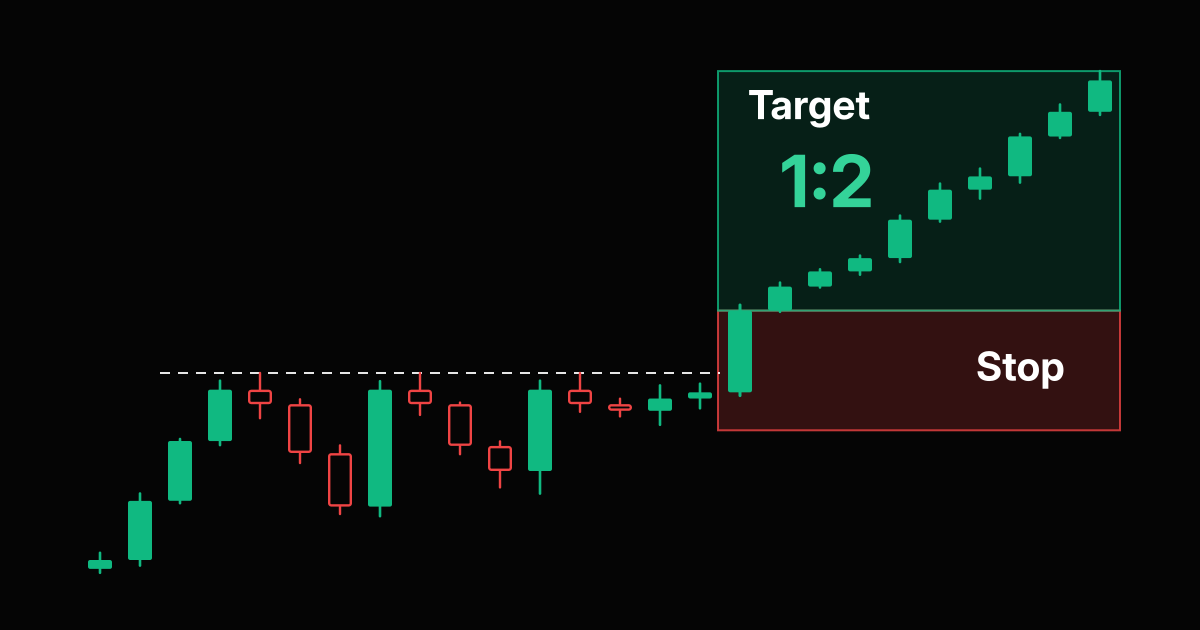
GBPUSD lot size tables for $1,000 to $25,000 at 1% risk
Each cell is the largest lot that keeps the loss at or under 1% of the account if the stop is hit, rounded down to the usual 0.01 lot step. The stops are a bit wider than in our EURUSD tables because cable moves more.
| Account | Risk at 1% | 15 pip stop | 25 pip stop | 40 pip stop | 60 pip stop |
|---|---|---|---|---|---|
| $1,000 | $10 | 0.06 | 0.04 | 0.02 | 0.01 |
| $2,500 | $25 | 0.16 | 0.10 | 0.06 | 0.04 |
| $5,000 | $50 | 0.33 | 0.20 | 0.12 | 0.08 |
| $10,000 | $100 | 0.66 | 0.40 | 0.25 | 0.16 |
| $25,000 | $250 | 1.66 | 1.00 | 0.62 | 0.41 |
The smallest order at most brokers is 0.01 lot, 10 cents per pip. A $1,000 account risking $10 can hold a stop of up to 100 pips at that size. Wider than that, the lot cannot shrink any further: wait for a tighter structure, accept a larger risk knowingly, or skip the trade. For more small accounts side by side, see How Many Lots Can I Trade With $100, $500 or $1,000?
Risk percent scales the lot in a straight line. Same $5,000 account, same 25 pip stop:
| Risk per trade | Risk money | Lot size (25 pip stop) | Loss after 5 losers in a row |
|---|---|---|---|
| 0.5% | $25 | 0.10 | $125 (2.5%) |
| 1% | $50 | 0.20 | $250 (5%) |
| 2% | $100 | 0.40 | $500 (10%) |
The last column uses fixed dollar risk on the starting balance to keep the math readable. Lot size only controls the loss; the payoff decides whether the trade is worth taking. Check the target against the stop with the risk reward calculator and our guide on how to calculate risk reward ratio.
How far GBPUSD moves, versus EURUSD
A stop tighter than normal noise gets hit by noise. To measure the scale we used the ECB euro reference rates, published once per business day, from November 7, 2025 to November 9, 2026 (GBPUSD derived from the euro rates, data via Frankfurter, 256 fixes):
| Measure (ECB daily fix) | GBPUSD | EURUSD | GBPUSD cost on 0.10 lot |
|---|---|---|---|
| Average move from one fix to the next, 1 year | 37.9 pips | 29.7 pips | $37.90 |
| Median move from one fix to the next, 1 year | 29.0 pips | 23.0 pips | $29.00 |
| Average move from one fix to the next, last 63 fixes | 32.2 pips | 28.6 pips | $32.20 |
| Average move over 5 fixes (about one week) | 84.2 pips | 71.4 pips | $84.20 |
| Largest single move (April 7 to 8, 2026) | 227.0 pips (1.71%) | 149.0 pips | $227.00 |
These are moves between two daily fixes, not the full high to low range of the day, which is wider. Over the year the rate went from 1.3121 to 1.3416, with a high of 1.3817 on January 29, 2026 and a low of 1.3062 on November 20, 2025. The practical lesson: on the same chart setup, a GBPUSD stop often needs to be about a quarter wider than a EURUSD stop, so the lot comes out about a quarter smaller for the same dollar risk. Size the lot to a stop that respects the structure instead of shrinking the stop to fit a bigger lot.
If your account is in pounds, euros or yen
The pip is still $10 on 1.0 lot, but your broker converts it into your account currency, and that converted value moves with the exchange rate. With the ECB reference rates of November 9, 2026:
| Account currency | Converts at | Value of 1 pip on 1.0 lot |
|---|---|---|
| US dollar | No conversion | $10 |
| British pound | GBPUSD 1.3416 | £7.45 |
| Euro | EURUSD 1.1193 | €8.93 |
| Swiss franc | USDCHF 0.8187 | CHF 8.19 |
| Japanese yen | USDJPY 157.95 | ¥1,580 |
For a pound account the pip value is $10 divided by GBPUSD. Over the last year it ranged from about £7.24 at the January high to about £7.66 at the November 2025 low, a drift of roughly 6%. That is why UK traders who use a fixed lot see their risk per pip change as cable moves. Rerun the numbers once the rate has moved a few hundred pips.
Check your broker, margin and correlation
Open the symbol Specification in MetaTrader (right click it in Market Watch). The MetaTrader 5 help lists the fields that matter:
- Contract size: units per 1.0 lot, normally 100,000. Cent or micro accounts may use less, which shrinks every value in this guide.
- Digits: five digits, as in 1.34160, means the last one is a point, so 10 points make a pip. A 25 pip stop is 250 points.
- Tick value: money per point on 1.0 lot in your account currency. In a US dollar account it should read $1, and ten times that is the $10 pip.
- Minimal volume and volume step: the smallest order and the increment, which decide when a table cell is really out of reach.
Leverage does not change your pip value. It only changes the margin your broker holds. In the EU, ESMA's retail CFD rules cap leverage at 30:1 for major currency pairs. At 1.3416, 1.0 lot is 100,000 pounds, about $134,160 of exposure, and needs about $4,472 of margin at 30:1. The 0.20 lot from example 1 needs about $894 of margin while its risk is still $2 per pip.
Finally, two correct lots can still be one oversized bet. On daily returns of the same ECB rates, GBPUSD had a correlation of 0.85 with EURUSD and -0.74 with USDCHF over the year to November 9, 2026. Long GBPUSD plus long EURUSD at 1% each behaves closer to 2% on one dollar idea. Check the live EURUSD vs GBPUSD correlation and GBPUSD vs USDCHF correlation, and read how to use correlation in forex. For the general method on every pair, see how to calculate lot size in forex or the position size calculator.
Frequently Asked Questions
How much is 1 lot of GBPUSD per pip?
On a standard 100,000 contract, 1.0 lot of GBPUSD is worth $10 per pip (a 0.0001 move). The pip is paid in US dollars, so the value is the same at any GBPUSD price. A 50 pip move on 1.0 lot is $500 before spread, commission and swap.
How much is 0.01 lot of GBPUSD worth?
0.01 lot of GBPUSD is 1,000 pounds and is worth $0.10 per pip. A 100 pip move changes profit or loss by $10. 0.10 lot is $1 per pip.
How do I calculate GBPUSD lot size?
Lots = (account equity × risk percent) ÷ (stop in pips × $10). Round down to your broker volume step. Example: $5,000 at 1% with a 25 pip stop is $50 ÷ $250 = 0.20 lot, which is $2 per pip.
What lot size should I use on GBPUSD with $1,000?
At 1% risk a $1,000 account risks $10 per trade. With a 25 pip stop that is 0.04 lot, with a 40 pip stop 0.02 lot, and with a 60 pip stop 0.01 lot. The minimum 0.01 lot covers stops of up to 100 pips at that risk.
How many pips does GBPUSD move in a day?
Across 256 ECB daily fixes from November 7, 2025 to November 9, 2026, GBPUSD moved 37.9 pips on average from one fix to the next (median 29.0), versus 29.7 for EURUSD. The largest move was 227 pips (1.71%) from April 7 to 8, 2026. Intraday high to low ranges are wider.
Is a GBPUSD pip worth the same as a EURUSD pip?
Yes. Both pairs end in USD, so 1.0 lot is $10 per pip on each in a dollar account. The difference is the stop: GBPUSD usually needs a wider stop because it moves more, so the lot is smaller for the same risk money.
Risk Disclaimer: Trading stocks, options, futures, forex, commodities, and cryptocurrencies involves substantial risk of loss and is not suitable for every investor. Past performance does not guarantee future results. This article is for educational purposes only and does not constitute financial advice. You should carefully consider your financial situation and risk tolerance before trading. Never trade with money you cannot afford to lose. Exchange rates, moves and correlations in this guide come from ECB reference rates from November 7, 2025 to November 9, 2026 and change every day. Contract sizes, tick values and minimum volumes vary by broker. Confirm the Specification on your platform before sizing a live order.