NAS100
NAS100 Lot Size: How to Calculate Position Size on the Nasdaq 100, Step by Step
On most retail CFD platforms, 1.0 lot of NAS100 moves $1 for every point the Nasdaq 100 moves, so 0.10 lot is $0.10 per point and 0.01 lot is $0.01 per point. Calculating your NAS100 lot size is four steps: decide the money you will risk, measure the stop in full index points, divide, and round down.
This Education guide walks through each step with worked examples, shows how far the Nasdaq 100 really moves in a day (from official closing data, so your stop is not inside normal noise), gives lot size tables for $500 to $25,000 accounts, and explains the decimals and futures traps. Every number uses the same preset as the free SIWAI NAS100 lot size calculator, so you can rerun any example with your own stop.
What one lot of NAS100 is
NAS100 is the symbol most MetaTrader brokers use for a CFD on the Nasdaq 100, an index of 100 large non financial companies listed on the Nasdaq Stock Market, weighted by market capitalization and rebalanced quarterly. An index CFD lot is not a number of shares. It is a contract size: a multiplier the broker applies to every point the index moves.
The usual retail setting is a contract size of 1. Scope Markets' index trading conditions, for example, list NAS100 with a contract size of 1, 2 digits, a minimum volume of 0.01 lot and a volume step of 0.01 lot. With a US dollar quote, a contract size of 1 means:
- 1.00 lot pays $1 per index point
- 0.10 lot pays $0.10 per index point
- 0.01 lot pays $0.01 per index point
What 0.01, 0.10 and 1.0 lot of NAS100 are worth per move
The table scales in a straight line: lots times points equals dollars. Spread, commission and overnight financing come on top.
| Lot size | 1 point | 50 points | 100 points | 250 points |
|---|---|---|---|---|
| 0.01 | $0.01 | $0.50 | $1 | $2.50 |
| 0.10 | $0.10 | $5 | $10 | $25 |
| 0.50 | $0.50 | $25 | $50 | $125 |
| 1.00 | $1 | $50 | $100 | $250 |
How far the Nasdaq 100 moves in a day
Before you size anything, you need a sense of normal movement, because a stop that sits inside ordinary daily noise gets hit for no reason. We measured the size of the daily close to close move using the official closes published on FRED (NASDAQ100 series, source Nasdaq), and the same for the Dow and the S&P 500. The Nasdaq 100 closed at 29,813.16 on October 28, 2026.
| Index (3 months to Oct 28, 2026) | Average daily move | Median daily move | Average in percent |
|---|---|---|---|
| Nasdaq 100 (NAS100) | 260.3 points | 212.9 points | 0.88% |
| Dow (US30) | 300.0 points | 263.2 points | 0.57% |
| S&P 500 (SPX500) | 43.1 points | 37.2 points | 0.56% |
Three months here means the 65 trading days from July 28 to October 28, 2026, measured close to close, so intraday ranges are larger. Over the full year to October 28, 2026 the Nasdaq 100 averaged 265.1 points (0.97%) a day with a median of 208.3 points, and its largest single day was June 5, 2026, when it fell 1,450.2 points (4.77%).
Two lessons follow. First, a NAS100 point and a US30 point both pay $1 per lot on a contract size of 1, and both indices cover a few hundred points on a normal day, so lot sizes for similar setups look alike. The S&P 500 moves far fewer points, so the same dollar risk buys a much bigger SPX500 lot. Second, in percent the Nasdaq 100 moved more than the other two, so a gap through your stop is a real risk around earnings and data releases (see why stocks drop after good earnings). A 50 point stop is less than a quarter of a median day, so it only makes sense on a short timeframe setup with a precise level.
How to calculate NAS100 lot size in four steps
- Risk money. Account equity × risk percent. $5,000 at 1% is $50.
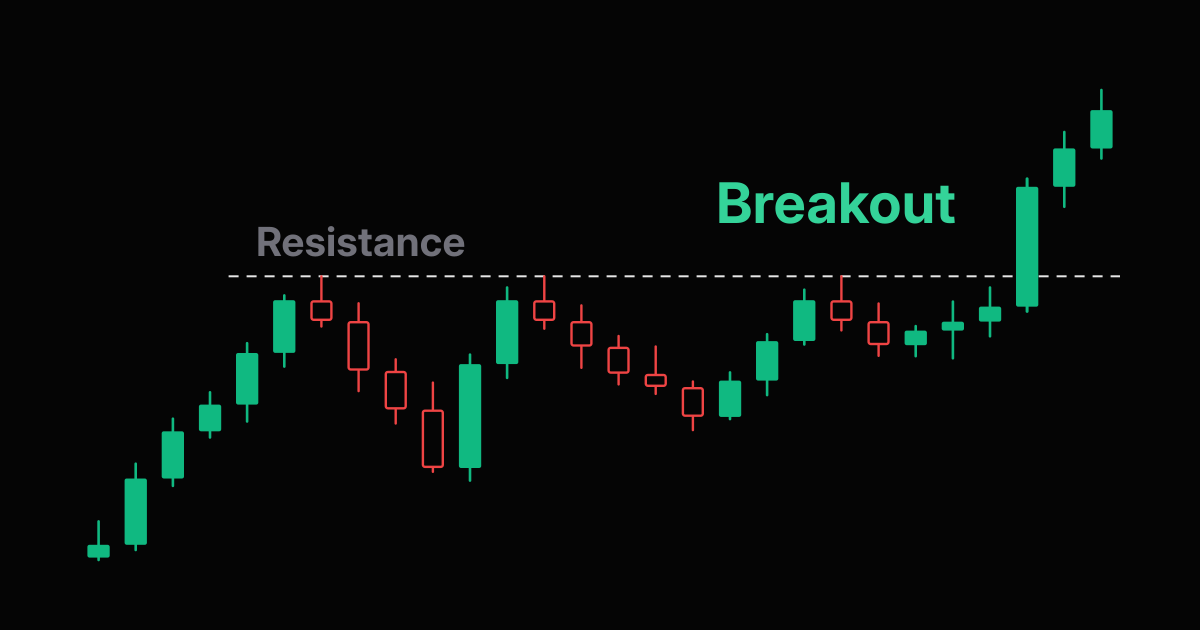
- Stop distance in full index points. Entry minus stop for a long, stop minus entry for a short. Put the stop where the setup is proven wrong, for example under the last higher low before a breakout, not at a round number of dollars.
- Divide. Lots = risk money ÷ (stop points × $1 per point per lot).
- Round down to your broker's volume step, usually 0.01 lot. Never round up, or you risk more than you planned.
Worked example. A $5,000 account risks 1%, so $50. A breakout buy has its stop 125 index points below the entry. $50 ÷ (125 × $1) = 0.40 lot. If price hits the stop you lose about $50 plus costs. With a target at twice the risk (250 points), a win pays about $100.
Same account, wider stop. A swing trade with a 300 point stop gives $50 ÷ 300 = 0.1667, which rounds down to 0.16 lot. The dollar risk stays at $50; only the lot shrinks.
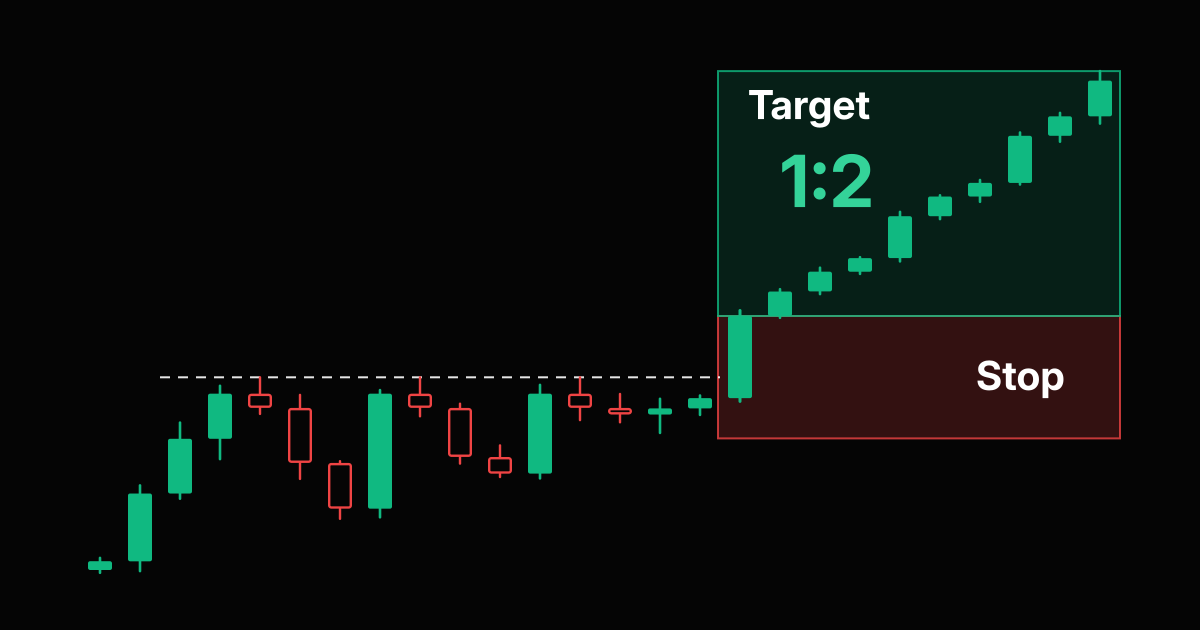
The lot controls the loss; the payoff decides whether the trade is worth taking. Check the ratio first with the risk reward calculator and our guide on how to calculate risk reward ratio.
NAS100 lot size tables for $500 to $25,000 at 1% risk
Lots at 1% risk, rounded down to 0.01, for four stop distances in full index points.
| Account | Risk at 1% | 50 pt stop | 100 pt stop | 200 pt stop | 300 pt stop |
|---|---|---|---|---|---|
| $500 | $5 | 0.10 | 0.05 | 0.02 | 0.01 |
| $1,000 | $10 | 0.20 | 0.10 | 0.05 | 0.03 |
| $2,500 | $25 | 0.50 | 0.25 | 0.12 | 0.08 |
| $5,000 | $50 | 1.00 | 0.50 | 0.25 | 0.16 |
| $10,000 | $100 | 2.00 | 1.00 | 0.50 | 0.33 |
| $25,000 | $250 | 5.00 | 2.50 | 1.25 | 0.83 |
The 0.01 lot check. The smallest order is 0.01 lot, or $0.01 per point, so the widest stop you can afford is your risk money ÷ $0.01. A $500 account at 1% ($5) can afford at most a 500 point stop, a bit more than twice the 212.9 point median day above. A $1,000 account at 1% can afford 1,000 points. If your stop is wider than that, the trade is too big for the account, whatever the setup looks like. Our guide on how many lots you can trade with $1,000 runs the same check across markets.
Two traps: platform decimals and futures math
Decimals. MetaTrader counts stops in platform points, which are the last decimal of the quote. With 2 digits, as in the Scope Markets example, one platform point is 0.01 index point, so a 150 index point stop shows up as 15,000 platform points. Plug 15,000 into the formula by mistake and your lot comes out a hundred times too small; plug a platform point stop into a calculator that expects index points and the error goes the other way. Always convert to full index points first.
Futures. Exchange traded Nasdaq 100 futures use fixed multipliers. CME Group's E-mini Nasdaq-100 is $20 × the index and the Micro E-mini Nasdaq-100 is $2 × the index, both with a minimum tick of 0.25 index points. So one Micro contract moves like 2.0 CFD lots and one E-mini like 20 lots. In the worked example above, a 125 point stop on a single Micro contract risks $250, which is 5% of a $5,000 account, five times the 1% plan. Never reuse futures sizing on a CFD account, or the reverse.
Check your broker before the first live NAS100 order
A contract size of 1 is common, not universal. In MetaTrader, right click the symbol in Market Watch and open Specification (the MetaTrader 5 help explains the window). Look for:
- Contract size: if it says 10 instead of 1, every value in this guide is ten times larger per lot, so divide the lots in the tables by 10.
- Digits and tick size: how many decimals one platform point is.
- Tick value: money per tick on 1.0 lot, a one number check of the math.
- Minimal volume and volume step: how far you must round down.
Leverage does not change your loss per point; it only changes the margin your broker holds. Margin is roughly lots × contract size × index level ÷ leverage. At the October 28, 2026 close of 29,813.16, 1.0 lot controls about $29,813 of index exposure, and at the 20:1 cap on major indices set by ESMA's CFD product intervention measures for EU retail clients, the margin is about $1,491.
If your account is in euros or pounds, the NAS100 point value is still paid in dollars, so convert your risk money to dollars before you divide (the forex lot size guide shows the conversion step). Trading the Dow too? The US30 lot size guide uses the same formula, the US30 vs NAS100 comparison explains how the two indices differ, and the SPX500 lots calculator and US30 lots calculator cover the other two US indices. To see how closely big tech stocks track the index ETF, try the NVDA vs QQQ correlation page.
Frequently Asked Questions
How much is 1 lot of NAS100?
On most CFD platforms with a contract size of 1, 1.0 lot of NAS100 pays $1 for every point the Nasdaq 100 moves, so a 100 point move is $100. Some brokers use a different contract size, so check Contract size in your platform Specification first.
How much is 0.01 lot of NAS100 worth?
At $1 per point per 1.0 lot, 0.01 lot of NAS100 is worth $0.01 per index point. A 200 point move changes your profit or loss by $2, before spread, commission and financing.
How do I calculate lot size for NAS100?
Multiply account equity by your risk percent, divide by your stop distance in full index points times $1, and round down to the volume step. Example: $5,000 at 1% is $50, and $50 divided by a 125 point stop is 0.40 lot.
What lot size should I use for NAS100 with a $1,000 account?
At 1% risk you have $10 to lose. That is 0.10 lot with a 100 point stop, 0.05 lot with a 200 point stop and 0.03 lot with a 300 point stop. The widest stop you can afford at 0.01 lot is 1,000 points.
How many points does NAS100 move in a day?
Over the 65 trading days from July 28 to October 28, 2026, the Nasdaq 100 moved an average of 260.3 points (0.88%) from close to close, with a median of 212.9 points, based on FRED daily closes. Intraday ranges are larger.
Is one Micro Nasdaq future the same as one lot of NAS100?
No. CME Micro E-mini Nasdaq-100 futures are $2 times the index, so one Micro contract moves like 2.0 CFD lots, and the E-mini at $20 times the index moves like 20 lots. Size futures and CFDs separately.
Risk Disclaimer: Trading stocks, options, futures, forex, commodities, and cryptocurrencies involves substantial risk of loss and is not suitable for every investor. Past performance does not guarantee future results. This article is for educational purposes only and does not constitute financial advice. You should carefully consider your financial situation and risk tolerance before trading. Never trade with money you cannot afford to lose. Index CFD contract sizes, tick values and minimum volumes vary by broker. Confirm the Specification on your platform before sizing a live order. Index statistics are calculated from FRED daily closes and describe the past, not future moves.